Track Your Order

- Jul 2, 2026
Inside Maison Rivière: Thirty Years of Kosher Bordeaux, Estate by Estate
The Bordeaux House That’s Been Making Kosher Wine Since 1997
Maison Rivière has been producing kosher wines continuously since 1997. Nearly three decades of unbroken production across multiple Bordeaux appellations place it among the longest-running kosher wine programs in the region. In a part of the wine world where many kosher projects appear for a few vintages and disappear just as quickly, that kind of consistency is rare and worth paying attention to.
Based in Saint-Émilion, Maison Rivière is a family-owned wine house founded in 1875 and still run by the same family today. For over 150 years and five generations, the Rivière family has worked continuously in the Bordeaux wine trade, taking responsibility for vineyards, cellar work, and relationships across the region.
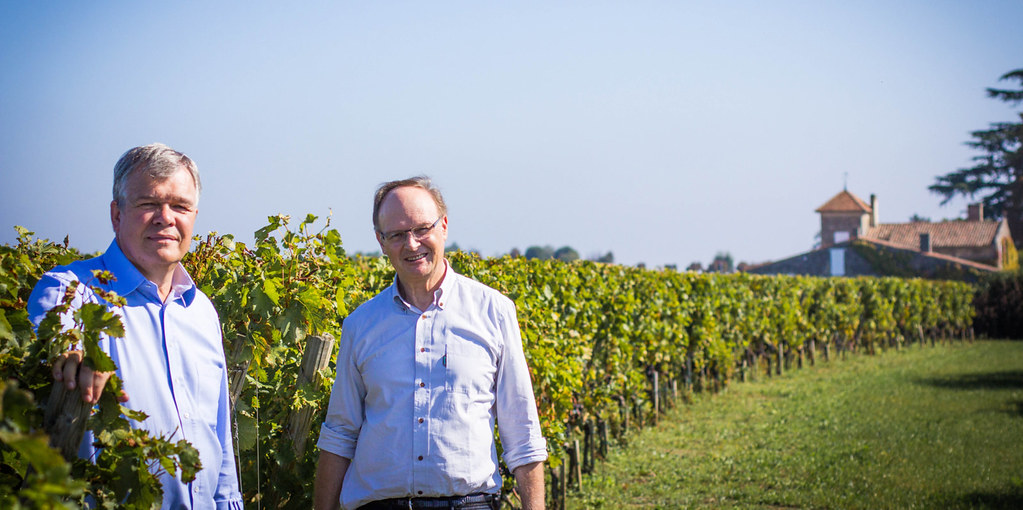
Today, the house is led by brothers Jean-Pierre and Philippe Rivière, who oversee both the estate and négociant sides of the business. The family manages six châteaux, representing 90 hectares of vineyards spread across Saint-Émilion Grand Cru and neighboring appellations. Vineyard management and vinification remain under direct family supervision, while négociant wines are produced through grower partnerships that, in many cases, span several decades.
Over time, the family has expanded carefully, adding properties and refining practices without altering the structure that has defined the house for generations. Estate production and négociant activity have long operated side by side, giving Maison Rivière a level of consistency that has proven durable over time, including in its kosher work.
Producer First, Négociant by Extension
In Bordeaux, the words producer and négociant carry histories as layered as the soils themselves, and the distinction between them matters far more than most wine drinkers ever realize.
To be a producer is to be rooted. It means owning the land, tending the vines through the quiet rhythms of the growing season, and making wine from grapes whose fate is guided from budbreak to harvest. Yields are decided parcel by parcel; harvest dates are chosen not by the calendar but by taste and intuition. Vinification and aging unfold under the same hands, year after year, shaped by continuity, memory, and an intimate understanding of place.
A négociant, by contrast, works across the region rather than within a single vineyard. Grapes, must, or finished wines are sourced from growers. From there, vinification, aging, blending, bottling, and distribution are overseen to translate many voices into a coherent expression of Bordeaux.
Maison Rivière does both, but the foundation is production.
Clos des Menuts: Saint-Émilion Grand Cru
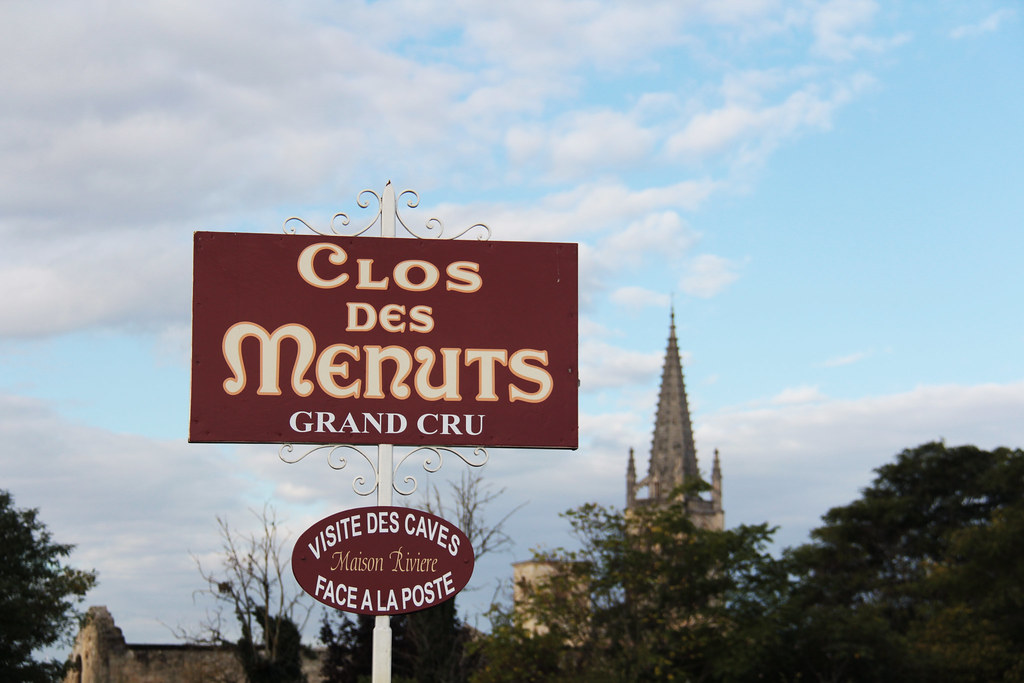
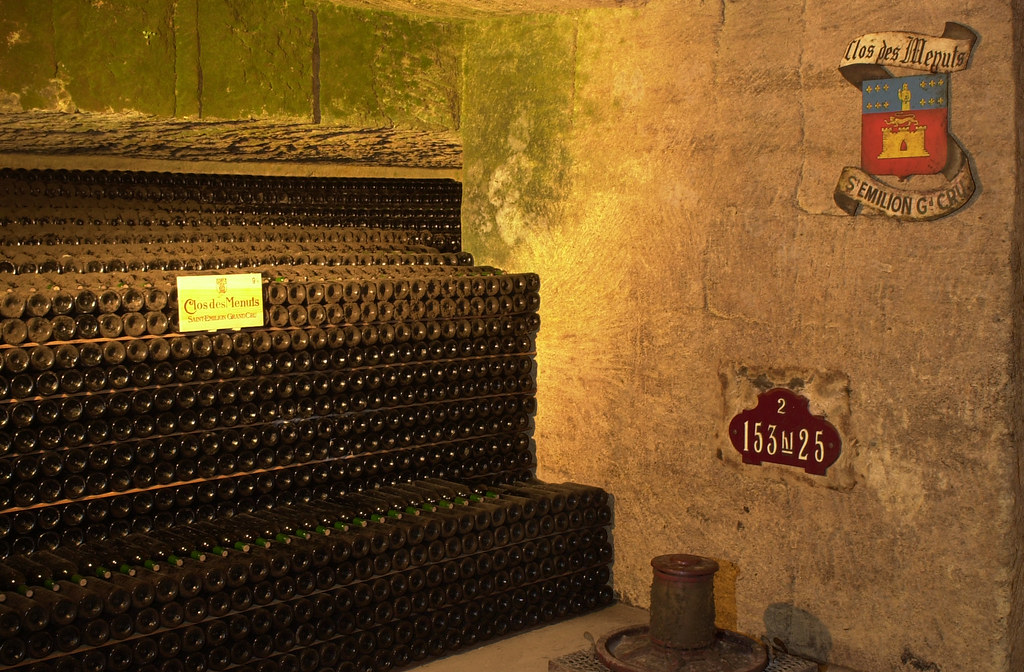
Clos des Menuts is the historic core of the Maison Rivière portfolio (first Kosher production in 2002). Located just outside the medieval village of Saint-Émilion, the site has documented wine history dating back to 1538, when Franciscan monks known as the Fray Menuts sold wine from this land. The estate still uses monolithic limestone cellars carved into the rock centuries ago, providing naturally stable conditions for aging.
The property was acquired by the Rivière family in 1956 and gradually expanded to its current 25 hectares, planted mainly to Merlot, with Cabernet Franc and Cabernet Sauvignon.
The village of Saint-Émilion is classified as a UNESCO World Heritage site, a designation tied directly to the continuity of its winegrowing history. That history is visible throughout the town, including on the stone walls themselves, where names of past wine merchants and négociants remain engraved. Among them appears Pierre Rivière; the family’s presence in Saint-Émilion is literally written into the village walls.
At Clos des Menuts, that heritage extends below ground. The estate’s monolithic limestone cellars, carved directly into the rock, form part of the same underground network that runs beneath the village. These spaces have been used for centuries for wine storage, benefiting from naturally stable temperature and humidity conditions that require no modern intervention.
In keeping with Saint-Émilion’s tradition as a living historical site, the cellars at Clos des Menuts remain open to the public. Visitors can walk through the underground galleries as part of the broader village experience, encountering working wine cellars that are still actively used rather than preserved as static monuments.
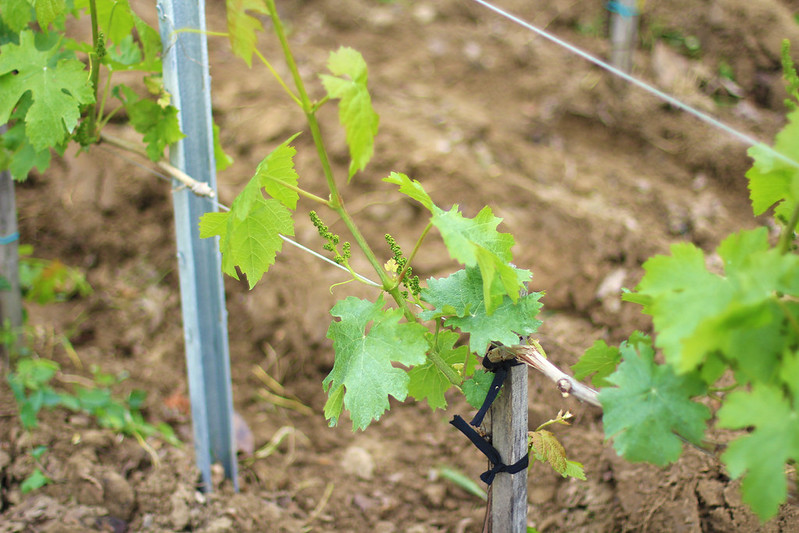
In 2001, the family began transitioning vineyard practices toward integrated and environmentally responsible viticulture. By 2015, chemical inputs had been eliminated, and in 2019, the estate earned HVE3 certification, the French standard for sustainable farming.
In 2007, Clos des Menuts began working with Stéphane Derenoncourt, one of Bordeaux’s leading wine-makers, refining parcel selection and vinification toward balance, precision, and complexity. His involvement also led to the creation of L’Excellence du Clos des Menuts, a cuvée drawn from the estate’s best parcels (which will be released in Kosher for the first time in 2026).
Today, Clos des Menuts produces a Saint-Émilion Grand Cru that leans classic in profile. The wine shows ripe Merlot-driven fruit with notes of black cherry, plum, and subtle spice, supported by limestone freshness and fine-grained tannins. The structure favors balance over power, with enough depth to age comfortably. At the table, it works naturally with roasted meats, lamb, duck, and dishes built around mushrooms or slow-cooked sauces.
Château de Callac: Where the Kosher Story Began
Kosher production at Maison Rivière began for simple, human reasons. The family had Jewish friends who could not drink their wines, and the question came up naturally: whether the wines they had spent generations producing could be shared at the same table. That curiosity led them to explore kosher production seriously.
As a long-established Bordeaux house, widening access to their wines felt like stewardship; an extension of the idea that Bordeaux wines should be open to as many people as possible, without changing what they are.
The first Kosher production began with the 1997 harvest at Château de Callac, in the heart of the Graves appellation. At the time, kosher Bordeaux wines were not the category it is today, and estate-level kosher production was still the exception rather than the rule.
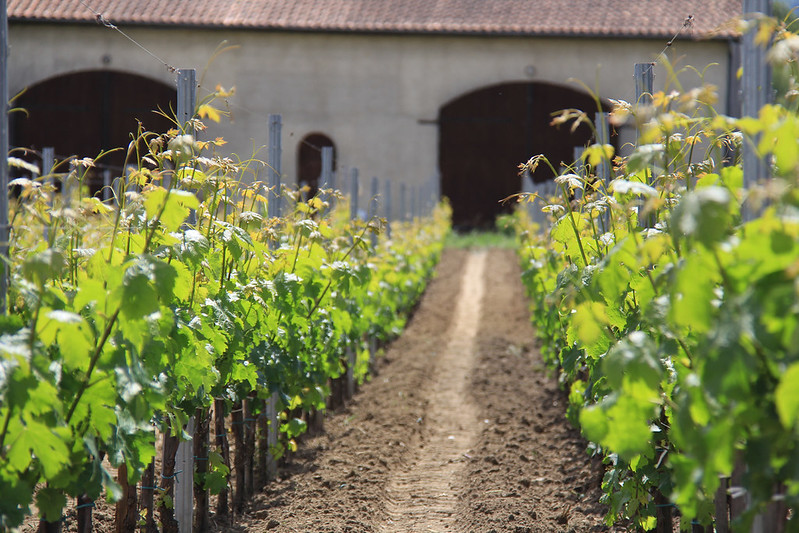
Château de Callac sits on classic gravel soils, the same deep, stony beds that give Graves its name and its reputation for structured, age-worthy wines. These soils drain quickly and retain heat, making them particularly well suited to Cabernet Sauvignon and Merlot. The result is a wine style that is firmer, more linear, and more traditionally Bordeaux in profile.
Because the Rivière family owned the property outright, they could reorganize cellar work to meet kosher requirements. Dedicated equipment, strict supervision, and carefully planned harvest logistics were built directly into the winery’s routine. What began as a single kosher production quickly became a working model for producing kosher wine within their Bordeaux estates.
Today, Château de Callac remains a cornerstone of the range. Its kosher Graves wines show dark fruit, structure, and a savory edge that works naturally with grilled meats, roasted vegetables, and heartier dishes. Just as importantly, the estate represents the starting point of a kosher program that would later expand across Bordeaux and beyond.
From Experiment to Annual Production
In 2002, Maison Rivière produced its first kosher Saint-Émilion. By 2005, kosher production had become annual and has remained so ever since. Today, the kosher range includes: Saint-Émilion Grand Cru, Lussac-Saint-Émilion, Graves, Médoc, Bordeaux, Bordeaux Supérieur, Pomerol, Lalande de Pomerol, and Saint-Estèphe.
Maison Rivière’s kosher wines have been carried by KosherWine.com since 2016, a relationship that developed naturally over time. While representing the Maison Rivière portfolio in the non-kosher market, I became increasingly aware of the depth and consistency of their kosher productions. After tasting through the range, it was clear to me that these wines deserved a partner in the U.S. who approached kosher wine with the same seriousness and long-term perspective that defines the rest of Maison Rivière’s work. I reached out to KosherWine.com, and what began with a modest mixed pallet as their first order gradually grew, year after year, into a deeper collaboration, eventually expanding into multiple container shipments annually. That progression reflected not just demand, but a shared confidence - in the wines, in the market, and in the belief that kosher Bordeaux belongs fully within the broader Bordeaux tradition, not apart from it.
The Negotiant Work
Maison Rivière has also operated for decades as a Bordeaux négociant, with access to top classified growths through long-standing allocations.
In the Rivière warehouses, cases from earlier decades remain part of the stock. Bottles from the 1970s and 1980s (including Lafite and Mouton) are stored alongside later vintages, organized by château and year.
Time moves differently at Maison Rivière. The business has passed through five generations, and decisions tend to be made with the next one in mind.
Relationships with other châteaux in the region span generations too. Many of the grower and estate partnerships in place today were established decades ago and maintained as family responsibilities rather than renegotiated from scratch.
In 2022, Maison Rivière began advising Classified Bordeaux estates on kosher wine production, helping them navigate supervision, cellar organization, and logistics without disrupting existing winemaking practices. By 2025, this role expanded beyond Bordeaux, with Maison Rivière coordinating kosher productions in Côtes de Provence, the Rhône Valley, and Bourgogne for the Israeli market.
After nearly three decades of continuous kosher production, that experience has become transferable. Thirty years of kosher winemaking is not just a milestone. It reflects commitment, accumulated knowledge, and a family structure capable of thinking in decades rather than vintages.
For kosher wine drinkers, that continuity translates into something tangible. You can open a Maison Rivière bottle with confidence that it will taste like Bordeaux should, that it will work at the table, and that it comes from a house that has been doing this, quietly and consistently, for a long time.
About The Author
Pierre Marcelin is the U.S. Export Director for Maison Rivière, where he has worked closely with the family for more than twelve years. Originally from Bordeaux and now based in the United States, he represents the Maison Rivière estates and spends his time helping importers and wine lovers discover Bordeaux wines from across the region, including the house’s kosher bottlings.
-
 Chateau de Lavagnac Bordeaux Superieur 2015$23.99 $19.99Save $4.00 (17%)
 -
 Clos des Menuts Saint-Emilion Grand Cru - Library Wine Collection 2003$99.99 $79.99Save $20.00 (20%)
 -
 Clos des Menuts Saint-Emilion Grand Cru 1.5L Magnum 2023$139.99 $109.99Save $30.00 (21%)
 -
 Clos des Menuts Saint-Emilion Grand Cru 2023$59.99 $39.99Save $20.00 (33%)